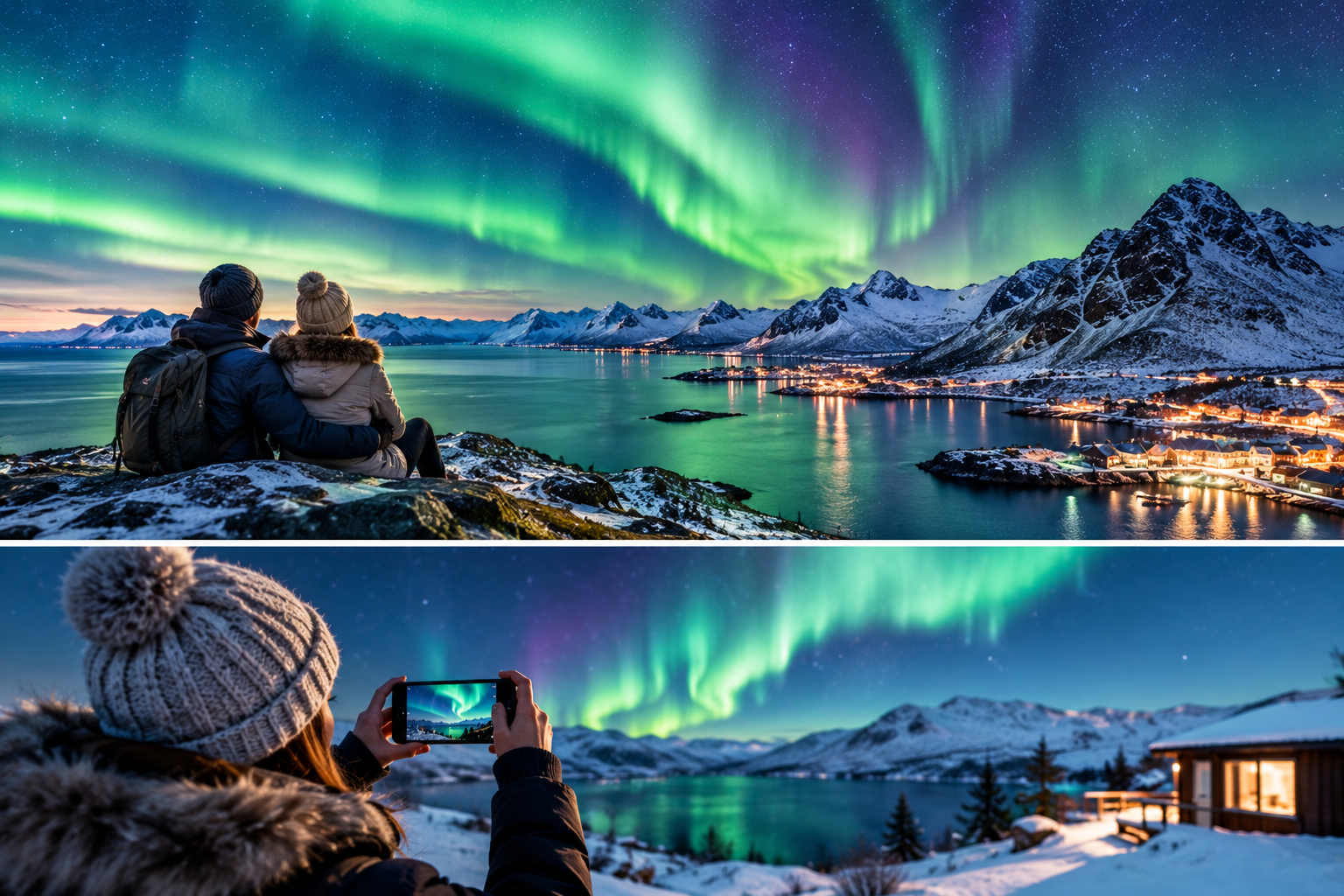
When is the best time to see the Northern Lights?
The Northern Lights are generally visible in high-latitude destinations from late August or September until March or early April, depending on the location.
- September and October: Darker nights return, with autumn landscapes and generally less snow.
- November to January: Long nights provide more opportunities to look for the aurora, although temperatures can be extremely cold.
- February and March: A good balance of dark evenings and increasing daylight for daytime activities.
There is no guaranteed best date. Sightings depend on solar activity, darkness and local weather conditions.
Where should you go?
Three destinations offer different ways to experience the aurora.
Tromsø, Norway
A popular base for Northern Lights excursions, Tromsø combines Arctic scenery with guided evening tours, fjord experiences and local culture. Coastal weather can be changeable, so prepare for wind, rain and snow. Explore practical advice from
Visit Norway.
Finnish Lapland
Ideal for travellers seeking snowy landscapes and winter activities, Finnish Lapland offers opportunities for reindeer experiences, snowshoeing and distinctive accommodation, including glass-roofed cabins. The aurora season generally extends from late summer to early spring. Find guidance at
Visit Finland.
Iceland
Combine Northern Lights hunting with waterfalls, volcanic landscapes and geothermal bathing. However, Iceland's weather can change quickly, and winter road conditions require careful planning. Visit the official
Iceland aurora guide.
What weather should you expect?
Conditions vary considerably. Coastal Norway can be relatively mild but wet and windy, while inland Arctic regions can experience severe cold. Iceland is known for rapidly changing weather.
Pack thermal layers, an insulating jacket, waterproof outerwear, warm gloves and suitable footwear with good grip. You may spend several hours outdoors waiting for the lights.
Our tip:
Check local forecasts daily, including cloud cover and road conditions. Clear skies are essential for viewing the aurora, regardless of how strong solar activity may be.
Should you book a guided tour?
For a first visit, a guided excursion is worth considering. Experienced local guides monitor forecasts and may be able to travel to locations with clearer skies.
Before booking, check what is included, the tour duration, transport arrangements and the operator's policy if the lights are not visible. No guide can guarantee a sighting.
For independent viewing, research safe locations in advance and avoid driving unfamiliar winter roads in poor conditions.
How many nights should you stay?
I would recommend allowing four to five nights, if your budget permits. This gives you several opportunities to see the aurora instead of relying on a single evening.
Choose accommodation that also makes the most of the destination, with convenient access to daytime activities and excursions. That way, your trip can still be memorable even if the skies remain cloudy.
For forecasts, the
Icelandic Meteorological Office provides aurora activity and cloud-cover information for Iceland. For other destinations, consult local meteorological services and official tourism resources.
A natural wonder worth planning for
A Northern Lights trip is about more than the possibility of seeing the sky glow. It is also an opportunity to discover Arctic landscapes, experience local culture and try activities you may never have considered before.
Choose the right season, allow enough nights, prepare for the weather and remain flexible. The aurora is unpredictable, but thoughtful planning can make the entire journey rewarding.
At Novium Travel, we believe the most extraordinary adventures begin with curiosity, preparation and an openness to discovering something new.