Autumn Around the World: A Season of Colour, Harvest and Tradition
There is something rather wonderful about autumn.
The light becomes softer, forests turn extraordinary shades of gold and red, vineyards come alive with harvest, and across the world communities gather to celebrate traditions that have been passed down through generations.
But autumn is not experienced in quite the same way everywhere.
In some places, it is a season of remembrance. In others, a celebration of harvest. Somewhere else, it might mean lanterns glowing against an evening sky, the first taste of this year's wine, or simply the pleasure of walking through a landscape transformed by colour.
For travellers, autumn offers a particularly rich opportunity to experience destinations beyond their headline attractions. It is a season of festivals, food, folklore and spectacular scenery, often with a distinctly local character.
Here are some of the traditions and experiences that make autumn around the world so special.
🍁
Autumn in Canada and New England
If autumn had a colour palette, it might well look like eastern Canada and New England.
From late September through October, forests across regions such as Quebec, Ontario, Vermont, New Hampshire and Maine become a spectacular patchwork of crimson, orange, yellow and gold.
The landscape itself becomes the attraction.
Scenic drives, lakeside walks, small towns and historic villages take on an entirely different character beneath the autumn canopy.
In New England, the tradition of taking a dedicated fall foliage trip has become almost an institution. Travellers follow scenic routes through Vermont and New Hampshire, stopping at covered bridges, country inns, farm shops and small communities along the way.
In Quebec, the Laurentians and Charlevoix region provide similarly impressive scenery, while further north the changing landscape becomes increasingly wild.
And then there is the food! Autumn brings apples, pumpkins, maple products, cider and hearty seasonal cooking. Combine the scenery with a stay at a country inn or boutique lodge, and the experience becomes about far more than simply seeing the leaves.
It is about slowing down and experiencing a destination at one of its most beautiful times of year.
🌾
Harvest Festivals: Celebrating the Fruits of the Land
Harvest is one of humanity's oldest reasons to celebrate.
Across Europe and beyond, autumn has traditionally marked the conclusion of the agricultural year, when crops have been gathered and communities come together to celebrate the fruits of the land.
Today, harvest festivals range from village traditions and agricultural fairs to major food and cultural celebrations.
At home here in Britain, harvest festivals remain a familiar part of the autumn calendar, while countries across Europe celebrate their own regional traditions involving food, music, markets and local produce.
Italy's autumn is particularly enticing for food lovers. Truffles, mushrooms, grapes, olives and chestnuts all feature prominently in seasonal celebrations.
In Tuscany, Umbria and Piedmont, autumn can be an extraordinary time to travel, combining beautiful countryside with wine, gastronomy and harvest experiences.
This is perhaps one of autumn's greatest travel pleasures: the chance to taste a destination at exactly the moment when its landscape is producing some of its finest ingredients.
🏮
When the Nights Glow With Lanterns
As the days become shorter, light becomes an increasingly important part of autumn celebrations.
Across Asia, lantern traditions create some of the season's most atmospheric scenes, with streets, temples and waterways illuminated after dark.
In China, lanterns have long played an important role in festivals and celebrations, while in Taiwan, lantern traditions have developed into spectacular public events.
Elsewhere in Asia, autumn festivals can combine lanterns with religious observances, harvest celebrations and community gatherings.
For travellers, these experiences offer a fascinating contrast to autumn's natural landscapes.
During the day, you might explore temples, historic neighbourhoods or mountain scenery. After sunset, the same destination can be transformed by hundreds or thousands of points of light.
It is a reminder that autumn isn't only about changing leaves.
Sometimes it is about what happens when the light begins to disappear.

🍷
The European Wine Harvest
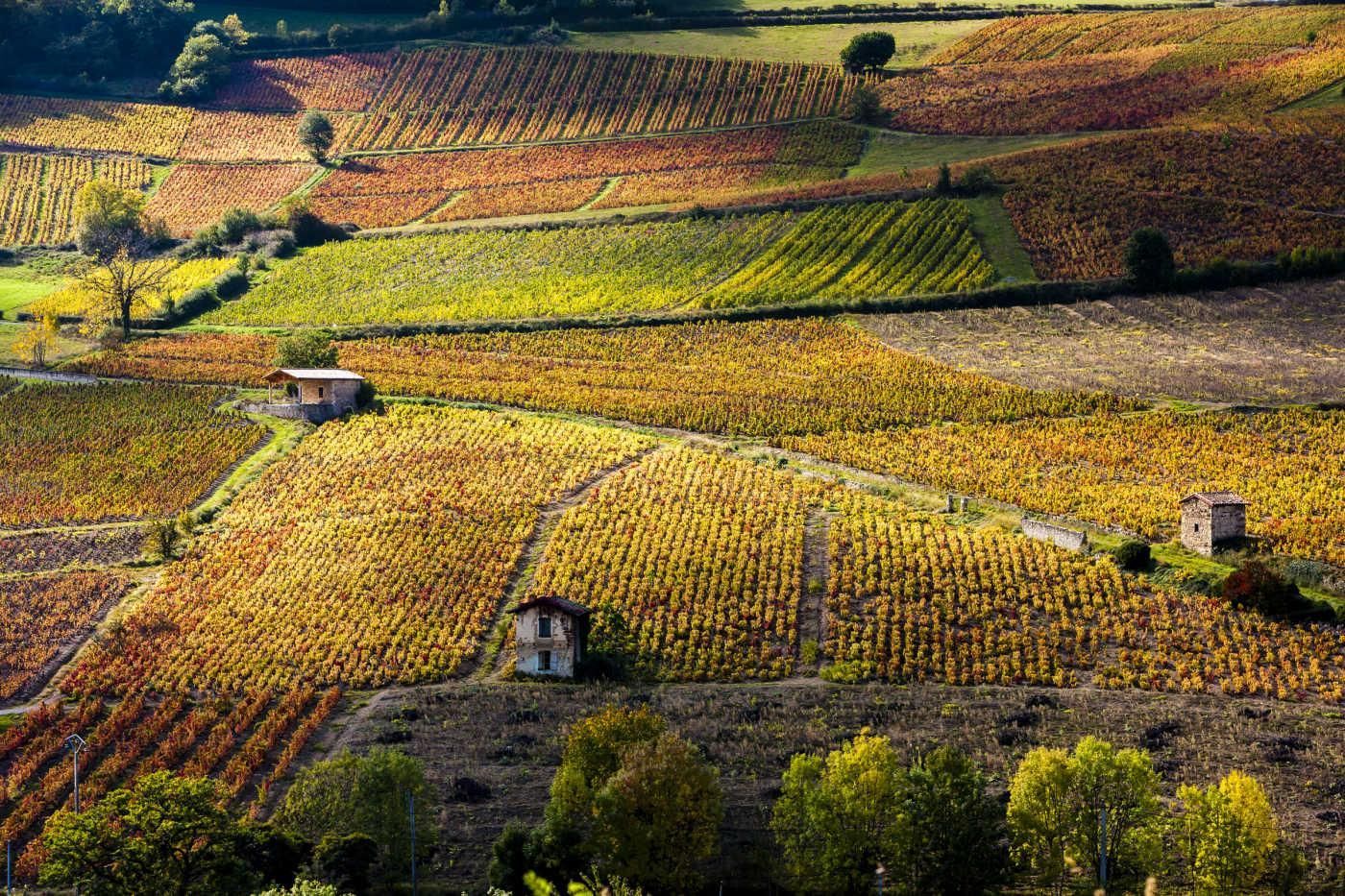
Few things capture the essence of autumn quite like a vineyard at harvest time.
Across Europe's great wine regions, September and October bring one of the year's most important moments.
Grapes are gathered from the vines, wineries become busy with activity and villages celebrate the year's crop.
France's Bordeaux and Burgundy, Italy's Tuscany and Piedmont, Spain's Rioja and Portugal's Douro Valley all offer opportunities to experience wine country during this fascinating period.
The Douro Valley is particularly spectacular, with vineyards cascading down steep hillsides towards the river. In Tuscany, the rolling landscape becomes a beautiful combination of autumn foliage and vineyards, while Piedmont offers the added attraction of its celebrated truffle season.
For wine lovers, an autumn journey can go considerably deeper than simply visiting a winery.
It can mean walking through the vineyards, meeting producers, enjoying regional food and understanding the relationship between the landscape and what eventually appears in the glass.
And there is something rather satisfying about drinking wine in the place where it began its journey.
🍂
Japan: Autumn as an Art Form
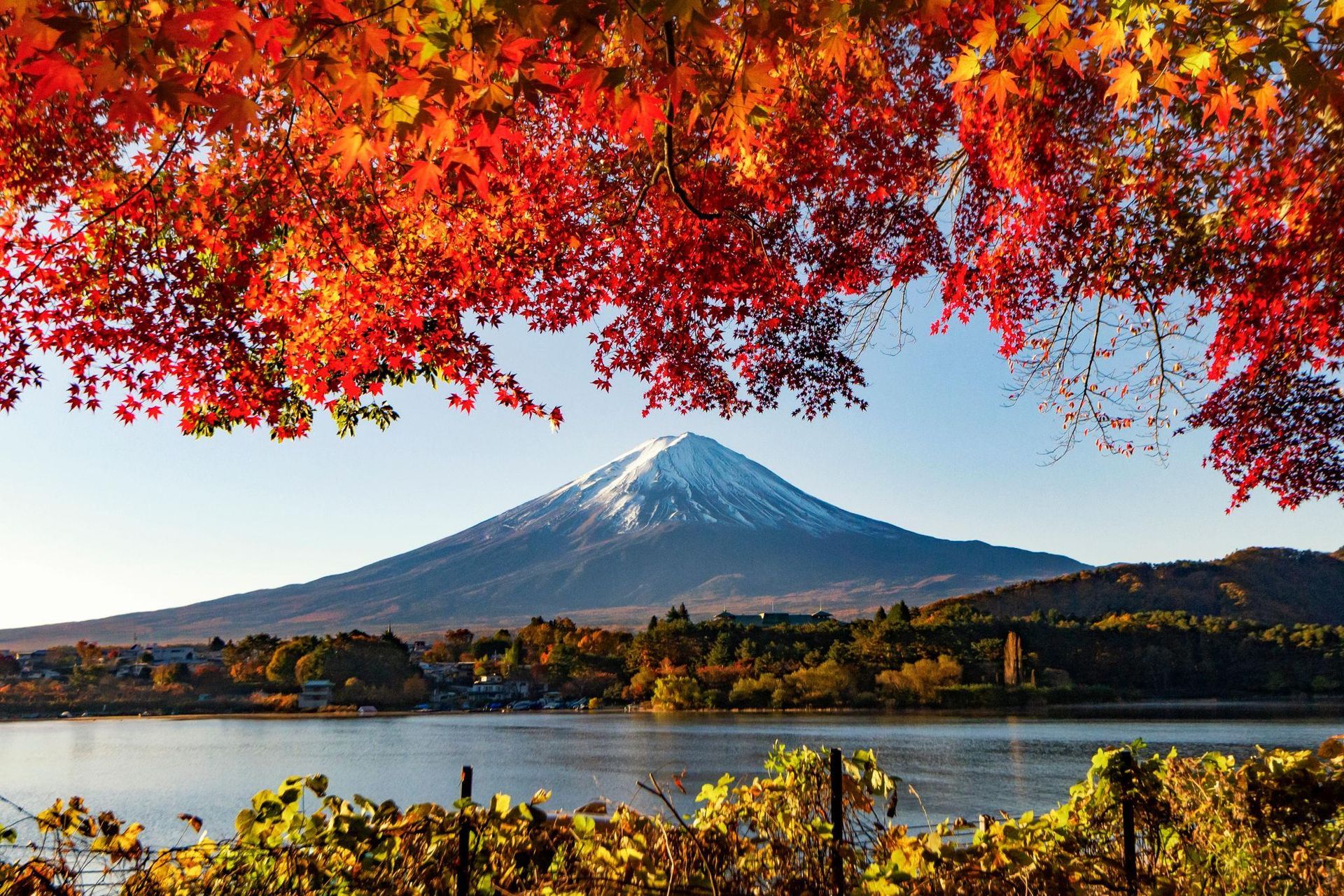
Japan has perhaps one of the world's most celebrated relationships with autumn.
The arrival of kōyō, the changing of the leaves, is eagerly anticipated each year.
Maple trees turn vivid shades of red and orange, ginkgo trees become brilliant yellow and temple gardens take on an almost theatrical quality.
Kyoto is one of the best-known destinations for autumn colour, with temples and gardens providing an extraordinary setting for the changing landscape. But the phenomenon extends far beyond the ancient capital.
The Japanese Alps, Nikko, Hokkaido and areas around Mount Fuji all offer spectacular autumn scenery at different times of the season.
There is also a deeper cultural appreciation of the season. The Japanese concept of mono no aware describes an awareness of the transient nature of things and the gentle melancholy associated with their passing.
Perhaps that helps explain why autumn in Japan is not simply something to photograph, but also something to appreciate.
A garden, a quiet temple, a cup of tea and a canopy of changing leaves can become an experience in itself.
Autumn Is About More Than Autumn
What makes autumn such a compelling time to travel is that it connects so many different aspects of a destination.
Nature. Forests change colour and landscapes become dramatically different.
Food. Markets fill with seasonal produce, from apples and pumpkins to mushrooms, truffles and grapes.
Wine. Vineyards become places of activity and celebration.
History. Ancient seasonal traditions continue to influence modern festivals.
Culture. Communities gather to celebrate, remember and share traditions.
And perhaps most importantly, people become part of the experience.
The best autumn journeys aren't necessarily about ticking off another famous sight. They are about being somewhere at the right moment, when something is happening that couldn't quite be experienced in the same way at another time of year.
Where Will Autumn Take You?
From the forests of New England to the vineyards of Portugal, from the colourful streets of Mexico to the temples of Kyoto, autumn reveals a different side of some of the world's most fascinating destinations.
It is a season of transition, but also one of celebration! For travellers willing to look beyond the obvious, it can be one of the most rewarding times of the year to explore.
Perhaps this autumn, rather than simply watching the season change at home, it's time to experience how the rest of the world celebrates it.
🎃 Halloween: More Than Just Costumes and Pumpkins
Few autumn traditions have travelled quite as far as Halloween.
While its modern incarnation is particularly associated with North America, its roots reach back much further, with traditions connected to the ancient Celtic festival of Samhain and later Christian observances.
Today, Halloween takes on a life of its own in destinations across the world.
In the United States, towns and cities embrace the season with elaborate decorations, pumpkin displays, haunted attractions and neighbourhood celebrations. New York becomes particularly atmospheric around late October, while smaller communities across New England offer a more traditional autumn backdrop.
For something genuinely atmospheric, however, consider travelling to places where Halloween's older influences can still be felt.
Ireland, particularly around County Meath and the Boyne Valley, is closely associated with the origins of Samhain. Here, ancient landscapes, archaeological sites and Celtic history add another dimension to the season.
It is a reminder that Halloween is not simply about ghosts and pumpkins. Beneath the modern celebration lies a much older relationship between people, the changing seasons and the natural world.
💀 Día de los Muertos: Remembering With Colour
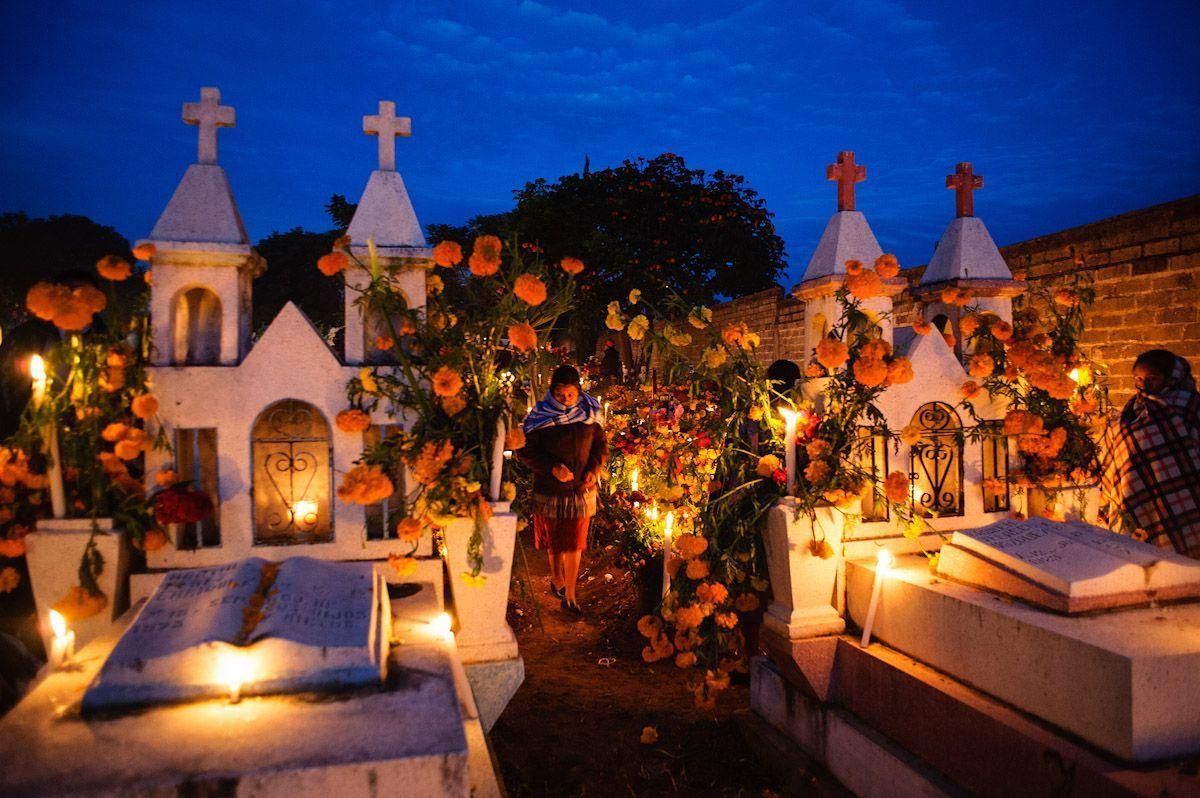
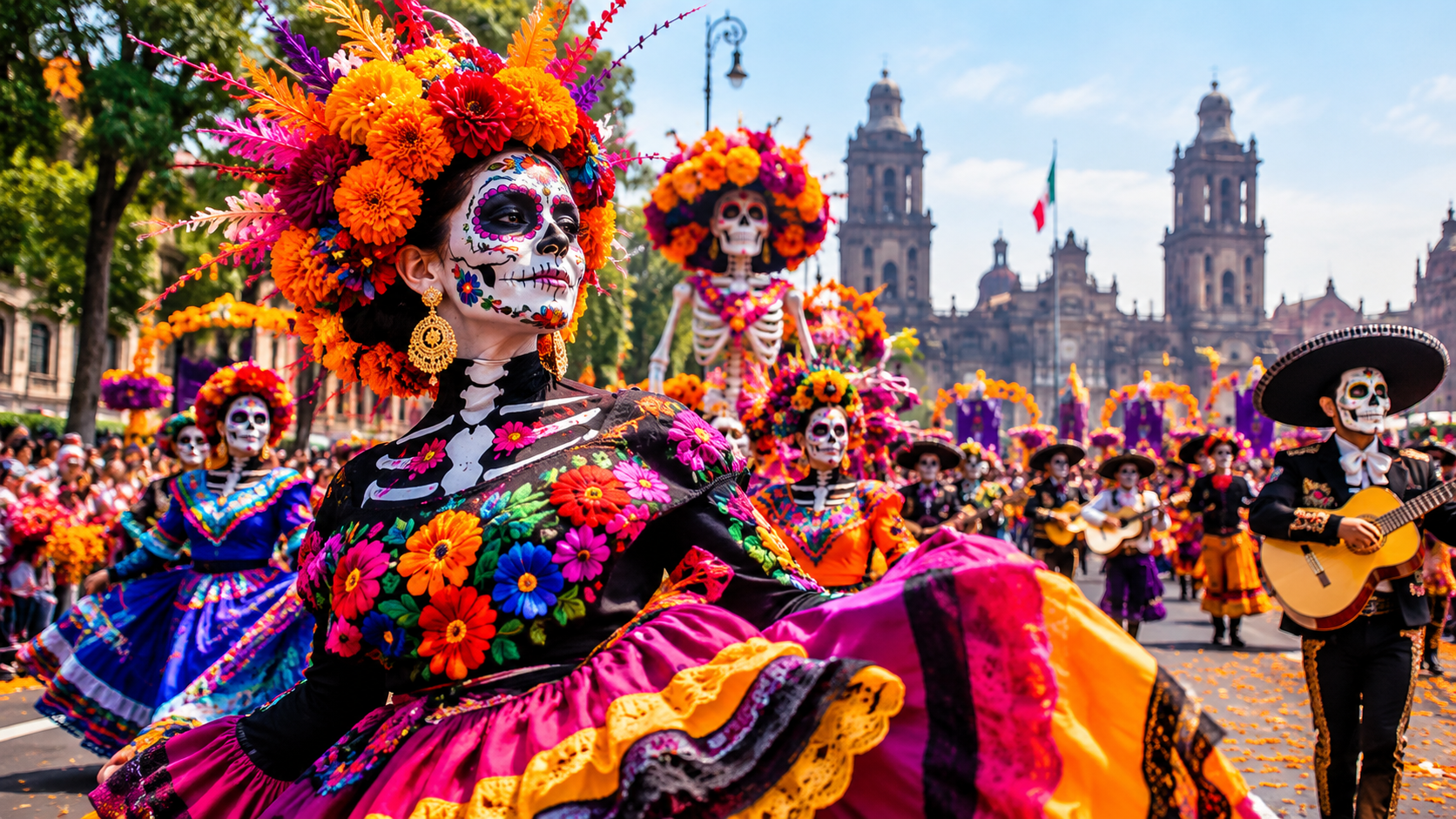
Few autumn celebrations are as visually striking as Día de los Muertos, Mexico's Day of the Dead.
Taking place primarily on 1 and 2 November, the festival is a time to remember and honour deceased family members and loved ones.
But rather than being sombre, the atmosphere can be wonderfully colourful.
Marigolds, candles, papel picado, decorated altars and beautifully painted skulls transform homes, cemeteries and public spaces. Families come together to remember those who have died, often sharing food and stories as part of the celebration.
Mexico City hosts spectacular public events, while destinations such as Oaxaca offer a more deeply rooted cultural experience, with traditions woven into the fabric of local communities.
For travellers, Día de los Muertos demonstrates something that makes cultural travel so rewarding: the opportunity to witness a tradition that is not simply performed for visitors, but remains an important part of people's lives.